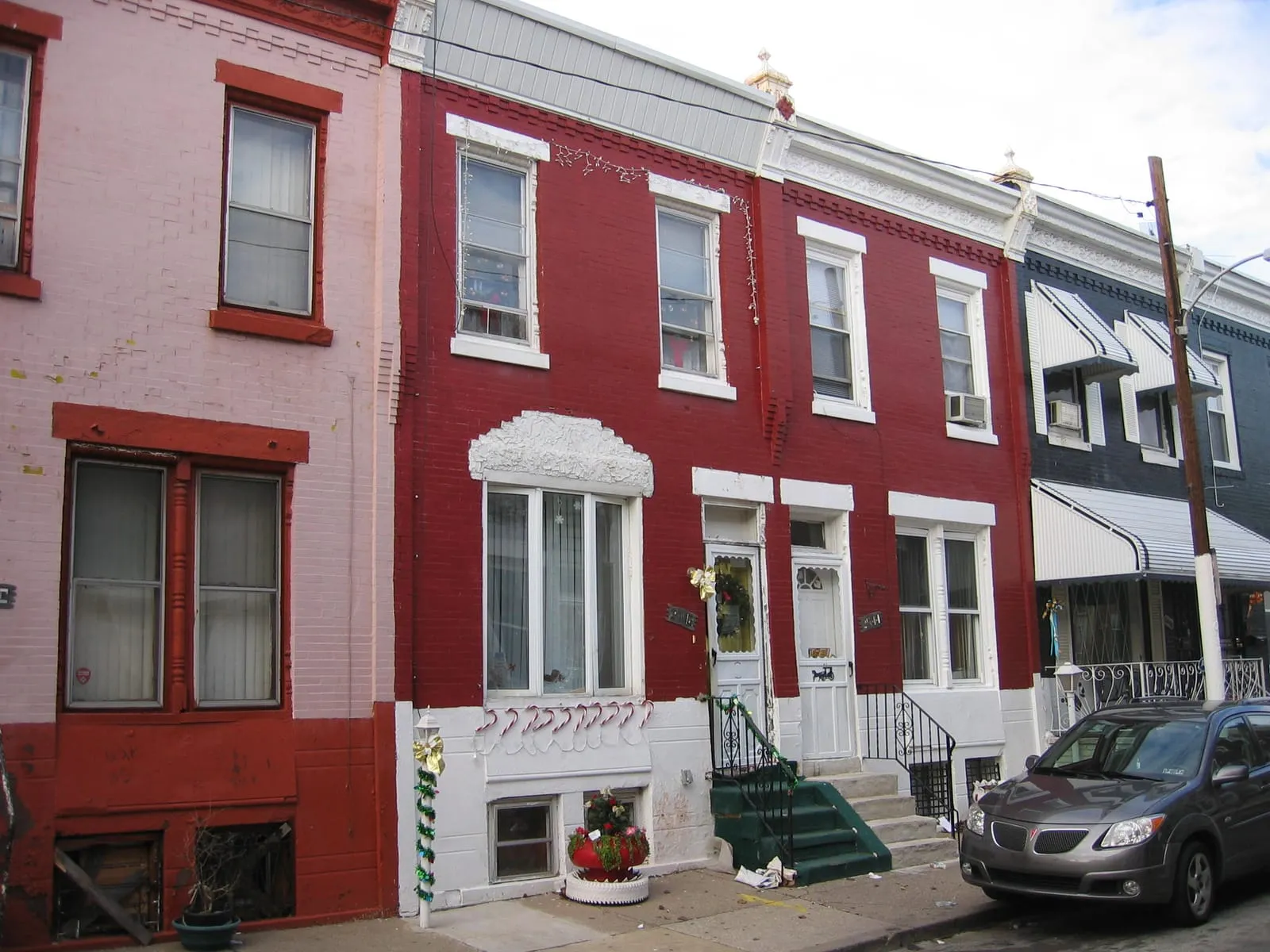

Philadelphia has its own Homestead Exemption, run by the City’s Department of Revenue. If you own your home and live in it as your main residence, it takes $100,000 off the assessed value your Real Estate Tax is figured on, and it’s the only City relief program with no income test [1][6]. Filing is free.
At a glance
- What it does
- Cuts your assessed value by $100,000 [1]
- Typical savings
- Up to $1,399 a year since 2025 [1]
- Who
- Owners who live in the home; no income limit [1][6]
- Apply by
- October 1 to see it on the December bill; final deadline December 1 [1]
- Reapply?
- No, unless your deed changes [1]
- Can't combine with
- LOOP or a 10-year abatement [1][2]
- Cost to apply
- Free
Who qualifies
You can get the exemption on a property you own and live in as your primary residence [1]. A mortgage doesn’t disqualify you, and neither does being a new owner or being behind on your taxes [1].
Two things do:
- A 10-year residential tax abatement. You can apply once it expires, or cancel the abatement to get the Homestead instead, but an abatement can’t be put back once it’s removed [1].
- LOOP. You can’t have the Longtime Owner Occupants Program and the Homestead Exemption at the same time [2].
If your name isn’t on the deed, for example because you inherited the house from a relative who died, a fraudulent deed was recorded, or you’ve paid toward a rent-to-own agreement, you may get a conditional Homestead Exemption for up to three years [1].
How to apply
- Online: use the Homestead Exemption application on the Philadelphia Tax Center (tax-services.phila.gov). You don’t need a username or password [1].
- By phone: call the Homestead Hotline, (215) 686-9200 [1].
- By mail: print the application and send it to City of Philadelphia, Department of Revenue, P.O. Box 52817, Philadelphia, PA 19115 [1].
If a previous owner is still listed on the property, call the hotline or send a paper application [1]. For a conditional exemption, send a paper application with “Tangled Title” written at the top, a signed Homestead Affidavit, and two documents showing your name and the property address, such as a government photo ID and a recent PGW, PECO, water or cable bill [1].
If you’re denied
The denial letter gives the reason. You can appeal to the Board of Revision of Taxes within 30 days of the letter’s date: send an appeal form, a copy of the letter and a written statement to 601 Walnut St., Suite 325 E., Philadelphia, PA 19106, or email appealinquiry@phila.gov [1].
When you move or the home changes
If the property no longer qualifies, for example you move out, you must tell Revenue within 45 days using the Homestead Change or Removal form [1]. Use the same form if part of the property is used for something other than your home [1].
Homestead or LOOP?
The Longtime Owner Occupants Program (LOOP) is for longtime owners whose assessment shot up. It caps the assessment at 1.5 times last year’s if your value rose at least 50% in a year, or 1.75 times the lowest amount if it rose at least 75% over five years, and locks that in while you stay eligible [2]. To qualify you must [2]:
- have lived in the home at least 10 years;
- be current on your taxes, or in an OOPA or installment plan; and
- have household income under the limit, which is 120% of area median income for new enrollees: $103,050 for one person or $147,200 for four.
LOOP applications for 2027 are open and due by September 30, 2027 to apply to that year’s bill [2]. The City notes that if your assessment rose by exactly 50% or 75%, LOOP won’t save you money right away compared with the Homestead [2]. Use the calculator on property.phila.gov to compare, and if LOOP wins, remove the Homestead at the same time you apply [2].
Freezes you can add on top
| Program | Who | Income limit | Deadline |
|---|---|---|---|
| Senior Citizen Tax Freeze | 65 or older; or living with a spouse 65+; or 50+ and widowed by someone who reached 65 | $33,500 single; $41,500 married | September 30 each year |
| Low-Income Tax Freeze | Any age; must own and live in the home | $33,500 single; $41,500 married | September 30 each year |
A freeze keeps your Real Estate Tax from going up, even if your assessment or the rate rises; if either goes down, your bill is lowered and frozen at the new amount [3][4]. The City says the low-income freeze can be combined with the Homestead Exemption [3]. If you missed the senior freeze deadline but are already 65 or older, the City can enroll you backdated [4].
You can apply for the Homestead, LOOP, both freezes and the installment plan with one combined application on the Philadelphia Tax Center [6]. Questions: Department of Revenue, (215) 686-6442 [6].
For the dates and payment plans that go with your bill, see our Philadelphia property tax due date guide, and for the rate, Philadelphia property tax rates.
Sources
- City of Philadelphia: Get the Homestead Exemption
- City of Philadelphia: Apply for the Longtime Owner Occupants Program (LOOP)
- City of Philadelphia: Apply for the low-income Real Estate Tax freeze
- City of Philadelphia: Apply for the senior citizen Real Estate Tax freeze
- City of Philadelphia, Office of Property Assessment: Understanding your notice of proposed valuation, tax year 2027
- City of Philadelphia, Department of Revenue: Learn how to lower your property tax bill ahead of the 2027 valuations (July 20, 2026)
Next steps
PhiladelphiaBest has a business relationship with these companies, and we may earn money if you use them. How we make money
Credit repair company
Credit Saint
If an old debt or another item on your credit report looks wrong, Credit Saint can help you challenge it with the credit bureaus.
You can also dispute errors yourself, for free, with Equifax, Experian and TransUnion. No company can legally remove accurate, timely information, and results vary.
Learn about Credit Saint →Free financial app
Bolster
Bolster is a free app for keeping an eye on your credit and building credit history over time.
Check the app's terms for any optional paid features.
See Bolster →Credit monitoring and credit builder
Credit Squad
Credit Squad watches your credit and identity and alerts you to changes. Its credit builder, included with every plan, reports your monthly payment to all three credit bureaus as an on-time installment payment.
Paid monthly subscription; see Credit Squad's site for current plans and terms. Credit building depends on on-time payments, and results vary.
See Credit Squad →Common questions
How much is the Philadelphia Homestead Exemption?
It reduces the assessed value of your home by $100,000. The City says that starting in 2025, most homeowners save up to $1,399 a year on their Real Estate Tax bill.
What is the deadline for the Philadelphia Homestead Exemption?
The final deadline is December 1 of each year. Apply by October 1 to have the exemption on the bill the City mails in December; if you're approved after October 1, you'll get a second bill with the adjusted amount.
Do I have to reapply for the Homestead Exemption every year?
No. Once you're approved, you never have to reapply unless your deed changes, for example when you refinance or add or remove a co-owner.
Can I have LOOP and the Homestead Exemption at the same time?
No. You have to choose one. LOOP caps your assessment for longtime owners whose value jumped at least 50% in a year or 75% in five years and who meet the income limit. The City's calculator on property.phila.gov compares the two for your home.